I'm no technophobe, but when it comes to time spent in front of a screen by children I get quite edgy. This reaction is a mixture of my own observations on behaviour, concentration, eating and activity patterns, and from reading widely on the subject both as a teacher and more recently as a parent.
The official guidance coming out of sources such as the US library of medicine suggests that screen time should be avoided completely for children under two years old, and limited to 1-2 hours a day for older children. The current average is 3 hours a day watching TV and a further 2-4 hours engaging in other 'screen time' activities, such as computer games and the internet. That up to a whopping 7 hours a day - as an average! Longer each day than they spend in school (although the increasing saturation of technology into the classroom is part of this overall screen time figure). This link provides some useful information on the downsides of all that viewing, and some hints for how to ween your kids down to the 1-2 hours recommended: http://www.nlm.nih.gov/medlineplus/ency/patientinstructions/000355.htm Bill Gates himself limits his kids to 45 mins screen time on weekdays, 1 hour on weekends, plus whatever they need to complete school assignments.
Ollie barely watched any TV until he was over a year old, as I felt it was not necessary and there were plenty of other things to be doing. He got a little screen time every couple of months watching Thomas the Tank Engine DVDs with his Gran and Grandad (something he still looks forward to), but that was about it. He was just over a year old when we first introduced him to the computer - in the picture above he's about 14 months and enjoying an online Thomas medley and games as a rare treat. Ollie was talking at just over a year old, and showing signs of abilities that were far beyond what the guidebooks suggested were in a normal range of abilities. When I did introduce TV it was a couple of shows on cbeebies that he liked and I thought were of educational value, such as 'Something Special' which teaches Makaton sign language and is a useful way to get kids used to seeing children who are differently-abled. These shows I made a point of sitting down and watching with him. I wonder how much of his current high functioning is related to the time we spent talking and singing and playing instead of vegging in front of the TV.
Toby, on the other hand, has had TV from birth, since I found that turning the idiot box on was the only way to get Ollie to stop pestering me for long enough to give Toby his feeds. With a newborn and a 2-year-old to manage, Ollie's screen time crept up and up, and his behaviour went down and down. After putting an hour limit in place he returned within days to the sweet tempered, if highly active, little lad we knew and loved. My big guilty not-so-secret-secret now is that I plop the boys in front of cbeebies for half and hour in the morning so I can have a quiet breakfast. We do still put our foot down and limit their screen time to an hour a day, rarely 2 hours, and also keep the content age-appropriate since cartoons aimed at even slightly older children seemed to result in nastiness. The kids he used to go to a gymnastics playgym session with getting far too carried away with their roles as Ben 10 and whatnot, resulting in physical violence and general aggression from them in Ollie and his little friend's direction. I'm convinced that children need time when they're really little to be sheltered from aggression and violence, since whatever people say, small kids deep down don't really differentiate between real life and fantasy. I wouldn't cross a bridge for years without my Dad stomping over it first out of a genuine fear of trolls, a la Billy Goat Gruff.
So that's my feelings on TV. What about games consoles and PCs? Again, so long as they fit in with my mantra of age appropriate and time-limited, I'm generally in favour of introducing children to computer games . I totally respect parents who decide that their kids are better off without any screen time, but my own thoughts are that a little gaming, from time to time, gets kids used to the idea of the technology without them feeling like it's a forbidden thing to be overly afraid of (or attracted to) and without getting addicted. Technology is without doubt addictive. How many hours did my friends at school spend nurturing basic virtual pets when they first hit the market I wonder? I gave up playing games like Zoo keeper and Sims myself because I could find myself glued to my screen all evening, looking up to find it was midnight and I still wanted to play on. In a tragic case reported in the Scientific American last week, a South Korean couple let their 3 month old baby starve to death home alone while they played a virtual life game in an internet gaming room, ironically nurturing their virtual daughter while their real child was dying on her own. This is an extreme case, but highlights our need to make sure our kids are technology aware and guided to regard games as a treat, not a right, and not a necessity.
How to go about introducing children to computer gaming? As I showed above, Ollie got an occasional dalliance with the PC (about once a fortnight) from a year old. We also have played Wii games with him. The next progression I think will be to the Nintendo DS, which is currently sitting in a draw going dusty, but which will be resurrected later on in the year for educational games to help take the boredom out of long car journeys. No matter how long the journey though, Ollie will still be time limited.
Looking to the future for the boys, there's a confusing array of consoles and games out there. Companies such as Gioteck http://www.gioteck.com/ are a useful starting point for looking at equipment to buy, and pride themselves on being run 'by gamers, for gamers' and so knowing all the requirements gaming enthusiasts will have, as well as being at the cutting edge of gaming technology. The best education game provision seems to be on the Nintendo DS, with games such as the brain trainer which may help with the skills needed to gain high scores on IQ tests (I know, that's a whole other can of worms which I'm not going to open right now). My favourite for smallish children is the Wii because its ability to be a physically active multiplayer platform means that it seems the best suited for counteracting the negative aspects of computer game use, such as lack of communication and lack of physical movement. It may be controversial, but I welcome schools bringing the Wii into PE lessons as a way of engaging students that would normally shy away from physical activity, so long as it is additional activity time, and not replacing other sports. At home though, it is worth making sure you play with the kids as the games intended, since kids are quite capable of circumventing the good elements of the platform by lying on the sofa on their own swishing the Wiimote with just the same game success as jumping around the room laughing and mucking around with friends and family.
I certainly won't be denying my kids the chance to learn through technology since I think that gaming, carefully controlled, can have positive impacts on learning, for example in picking up languages through games such as Dora the Explorer, or fine and gross motor skills in using games console controllers. The key is control. You, as a parent are perfectly within your rights to limit screen time, no matter how much they might moan. Studies show your reward will be kids who are better at communicating, more imaginative, perform better in school and are less at risk of obesity. If you decide on an all out ban, that's cool too, but I worry a bit about the Willy Wonker effect where (in the Johnny Depp version of the film) total denial of sweets in childhood led to a lifelong obsession as an adult. If you have older kids and they make a stink about it being limited, get them to read the research supporting your decision online themselves and they may even surprise you and agree :)
P.S. this blog post was sponsored, but the opinions I express are genuinely my own, and those who know me know I've never been backwards at coming forwards with my views on this :)
Polymath teacher, science presenter, student, writer, home educator, mum. The places we go to and the things that we do.
Wednesday, 26 June 2013
Tuesday, 25 June 2013
Amazing photographer
I'm blessed to know some really exceptional people, who excel in a variety of different roles; wonderful home-makers, talented artists, fitness gurus, master chefs, mathmagicians, crafters... The list of talents of the people around me is massive one, and expanding daily, as new friends come along and old ones gain new passions.
This post is a sincere thank you to a very talented lady whose work I think deserves a really wide audience. She is a mum to three busy little lads, and still found time to help out a slightly panicky me when I needed a head shot today for my article in the forthcoming Green Parent Magazine (July/August issue).
Have a look at her examples on https://www.facebook.com/pages/BubbaBaby-Photography/242232179218145. I genuinely look better in this photo than I do in pictures from 10 years ago! Since this was taken at the end of a long day of activities with two small boys you can imagine what a normal photo of me would have looked like :) If she can do this for me, imagine how gorgeous your little folks will look in her pics!
p.s.I know I'm no supermodel. This post is about the talents of a friend, not me trying to blow my own trumpet, before any meany friends and strangers start leaving rude messages for me :) xxx
This post is a sincere thank you to a very talented lady whose work I think deserves a really wide audience. She is a mum to three busy little lads, and still found time to help out a slightly panicky me when I needed a head shot today for my article in the forthcoming Green Parent Magazine (July/August issue).
Have a look at her examples on https://www.facebook.com/pages/BubbaBaby-Photography/242232179218145. I genuinely look better in this photo than I do in pictures from 10 years ago! Since this was taken at the end of a long day of activities with two small boys you can imagine what a normal photo of me would have looked like :) If she can do this for me, imagine how gorgeous your little folks will look in her pics!
p.s.I know I'm no supermodel. This post is about the talents of a friend, not me trying to blow my own trumpet, before any meany friends and strangers start leaving rude messages for me :) xxx
Tuesday, 18 June 2013
(Very) Messy Play - 'moon sand'
Here's an idea I adapted slightly from something we did at playgroup a couple of weeks ago. You can make a 'sand' for pressing into 'sandcastles' and other creative play from flour. At playgroup they mixed plain flour with a little baby oil to form the consistency of apple-crumble topping, but since the chances of Toby eating it were pretty high I exchanged the baby oil for regular vegetable cooking oil. Playgroup also suggested colouring the sand with powder paints, but again I switched this for food colouring. For wheat-allergic kids I see no reason why you couldn't substitute the flour for cornflour or other non-allergic flour.
Ollie started of exploring the sand and enjoying playing with it in a relatively sedate way, building castles and roads, which is his current obsession. When Toby woke up from his nap I put the tray of moon sand on the floor for them to play with together, and
added in some extra spoons, cars and pots. Again, it all started off quite sedate and with lots of building and squishing. Very quickly, however, Toby realised that throwing the moon sand up in the air made Ollie laugh. Ollie wanted to make Toby laugh in return, but since he's bigger and stronger, rather than dropping down neatly back on to the tray, suddenly the moon sand was flying everywhere, which made both of them laugh uproariously. It wasn't long before Ollie took to loading the tray back up with moon sand and tipping it over his own head, which little brother tried valiantly to copy. In the tradition of small boys everywhere, they never laugh as much as when they think they're being naughty and causing a right royal mess!
The saving grace of this activity is that it does clean up pretty easily with a dustpan, although the oil content means that caution needs to be exercised as the floor (and the children) can become a bit slippery. I wouldn't recommend this at all if you have carpets you care about. I also barricaded across the door to try and prevent small flour covered boys charging into the rest of the house and coating everywhere. My barricade failed and I'm again grateful for the amazing vacuum cleaner my parents sent to me last year, and to the fact that my cushions can go in the washing machine.
Sitting down later, reading stories to my freshly bathed (for the second time that day) boys, I could forget about the cleanup and hold in my heart the sound of their laughter. Messy play is what it is, and the freedom to explore tactile sensations and new ways to play is invaluable. We spend so much time saying no to our kids chaotic impulses that it's really important to present them with (slightly) organised opportunities to have more feedom, so when you're feeling energetic and the house could do with a good spring clean anyway, I would highly recommend 'moon sand'. I do not accept any responsibility however for damage to soft furnishings or to your sanity x
Ollie started of exploring the sand and enjoying playing with it in a relatively sedate way, building castles and roads, which is his current obsession. When Toby woke up from his nap I put the tray of moon sand on the floor for them to play with together, and
added in some extra spoons, cars and pots. Again, it all started off quite sedate and with lots of building and squishing. Very quickly, however, Toby realised that throwing the moon sand up in the air made Ollie laugh. Ollie wanted to make Toby laugh in return, but since he's bigger and stronger, rather than dropping down neatly back on to the tray, suddenly the moon sand was flying everywhere, which made both of them laugh uproariously. It wasn't long before Ollie took to loading the tray back up with moon sand and tipping it over his own head, which little brother tried valiantly to copy. In the tradition of small boys everywhere, they never laugh as much as when they think they're being naughty and causing a right royal mess!
Sitting down later, reading stories to my freshly bathed (for the second time that day) boys, I could forget about the cleanup and hold in my heart the sound of their laughter. Messy play is what it is, and the freedom to explore tactile sensations and new ways to play is invaluable. We spend so much time saying no to our kids chaotic impulses that it's really important to present them with (slightly) organised opportunities to have more feedom, so when you're feeling energetic and the house could do with a good spring clean anyway, I would highly recommend 'moon sand'. I do not accept any responsibility however for damage to soft furnishings or to your sanity x
Thursday, 6 June 2013
Painting with flowers
Here's an easy idea that worked really well with both my three-year-old and my 17 month-old. We collected a few flowers and leaves from the side of the path on our walk, and from our garden. I cut the backs off some old cards (the kind where the writing is on a paper inlay, so the card itself is blank). We dribbled and spread PVA glue on the card (gluestick would work too, but I find PVA holds better). I helped the boys pick off the petals from the big flowers and small inflorescences from the umbellifer (cow parsley, see note at bottom). The boys then chose which bits of vegetation they wanted and stuck them all on. I was expecting my eldest to enjoy this, but was amazed by how quickly my youngest caught on to what we were doing and joined in. He excitedly gestured to the bits he wanted next, and re-stuck any that fell off. The pictures are currently stuck to the fridge with magnets while the glue dries, but will then need to get thoroughly pressed to push out the moisture and preserve the flowers, after which they should keep well. I haven't got a flower press, but I find layers of paper from the recycling box either side of the flower to be pressed, then piled high with books seems to do the trick.
On the face of it this is a really straightforward activity. The time it takes will depend on how long your flower foraging lasts, but expect no longer than 10 minutes attention time from small children when doing the actual sticking. The foraging part is a handy botany lesson in which things they can touch or should avoid and helps with pattern recognition. The sticking is a lovely creative activity that encourages them to think about colours and composition and breaks any ideas that may be forming that art is just drawing and painting. In addition, this is a wonderful sensory activity, feeling the different textures of the leaves, seeing the colours and smelling the flowers. The scent of the wallflower petals is still permeating my kitchen now, despite us having made the pictures hours ago. The language skills being developed are an added benefit as you can get your little one to describe what they're making, and the colours, textures and smells. Older children may like to use the petals to form a picture of something, perhaps a flower made of flowers and leaves, or a circular mandala. This kind of activity is also a really good mixture of activity and quiet(ish) concentration time, with the sticking part being a nice break in between running around on our walk and running around on the patio playing with the sand and water trays.
This is only a very rough guide, but here's a sort of risk assessment/ suggestions of things to watch out for. I let Ollie start collecting hedgerow things under close supervision at about two and a half, when he could reliably follow instructions to keep his hands off certain things and not put everything in his mouth, but this varies from child to child so if in doubt, perhaps instigate a rule where they pick only what you point to. Toby was only let loose picking in the garden as I know that I haven't got any poisonous or harmful plants there. Teaching kids some basic plant identification skills for things to avoid is really useful. In the UK that includes stinging nettles, brambles and other prickly things, ivy (probably fine for them to hold, but I'm never 100% confident it's not going to get nibbled), daffodils, buttercups and arum lily. There's plenty of others that are not nice, but they're our most common local things. We used cow parsley in our picture, but if in doubt avoid as it has nasty cousins such as hogweed. We've all been drilled in this country not to pick wild flowers, but common sense will tell you that common and abundant weedy species in public spaces (e.g. dandelions) will not cause any raised eyebrows. Stick to edible flowers and leaves such as pansies, nasturtiums, dandelions and daisies if you're doing this with toddlers or older kids who still put everything in their mouths.
On the face of it this is a really straightforward activity. The time it takes will depend on how long your flower foraging lasts, but expect no longer than 10 minutes attention time from small children when doing the actual sticking. The foraging part is a handy botany lesson in which things they can touch or should avoid and helps with pattern recognition. The sticking is a lovely creative activity that encourages them to think about colours and composition and breaks any ideas that may be forming that art is just drawing and painting. In addition, this is a wonderful sensory activity, feeling the different textures of the leaves, seeing the colours and smelling the flowers. The scent of the wallflower petals is still permeating my kitchen now, despite us having made the pictures hours ago. The language skills being developed are an added benefit as you can get your little one to describe what they're making, and the colours, textures and smells. Older children may like to use the petals to form a picture of something, perhaps a flower made of flowers and leaves, or a circular mandala. This kind of activity is also a really good mixture of activity and quiet(ish) concentration time, with the sticking part being a nice break in between running around on our walk and running around on the patio playing with the sand and water trays.
This is only a very rough guide, but here's a sort of risk assessment/ suggestions of things to watch out for. I let Ollie start collecting hedgerow things under close supervision at about two and a half, when he could reliably follow instructions to keep his hands off certain things and not put everything in his mouth, but this varies from child to child so if in doubt, perhaps instigate a rule where they pick only what you point to. Toby was only let loose picking in the garden as I know that I haven't got any poisonous or harmful plants there. Teaching kids some basic plant identification skills for things to avoid is really useful. In the UK that includes stinging nettles, brambles and other prickly things, ivy (probably fine for them to hold, but I'm never 100% confident it's not going to get nibbled), daffodils, buttercups and arum lily. There's plenty of others that are not nice, but they're our most common local things. We used cow parsley in our picture, but if in doubt avoid as it has nasty cousins such as hogweed. We've all been drilled in this country not to pick wild flowers, but common sense will tell you that common and abundant weedy species in public spaces (e.g. dandelions) will not cause any raised eyebrows. Stick to edible flowers and leaves such as pansies, nasturtiums, dandelions and daisies if you're doing this with toddlers or older kids who still put everything in their mouths.
Thursday, 30 May 2013
Reinforcing your child's sense of belonging in their family home(s)
Children crave stability, and a sense of belonging. As parents there is only so much we can do to provide a home that doesn't move, a family that stays together and a continuum of schooling where the child sees the same faces throughout their education. Realistically, for most people, the idea of living in the same home for generations and being embedded in a village style community isn't something we can, or even would want, to provide. This is not to say that we shouldn't be aware of how much
change can upset our kids though, and there are many ways we can help to raise children who feel like they belong. As a child my family moved a few times for jobs, and it always troubled me that I couldn't reply to the simple question in French classes 'where are you from?'. I was born in Scotland, but left as a tiny baby, and my family and accent weren't Scottish, so I couldn't claim to be 'from' Scotland. Likewise Devon, or
Buckinghamshire, or Worcestershire, or Cambridgeshire. My parents were however (and still are) masters of making you feel loved and cherished and this is an environment I want to imitate as I learn to be a good parent myself.
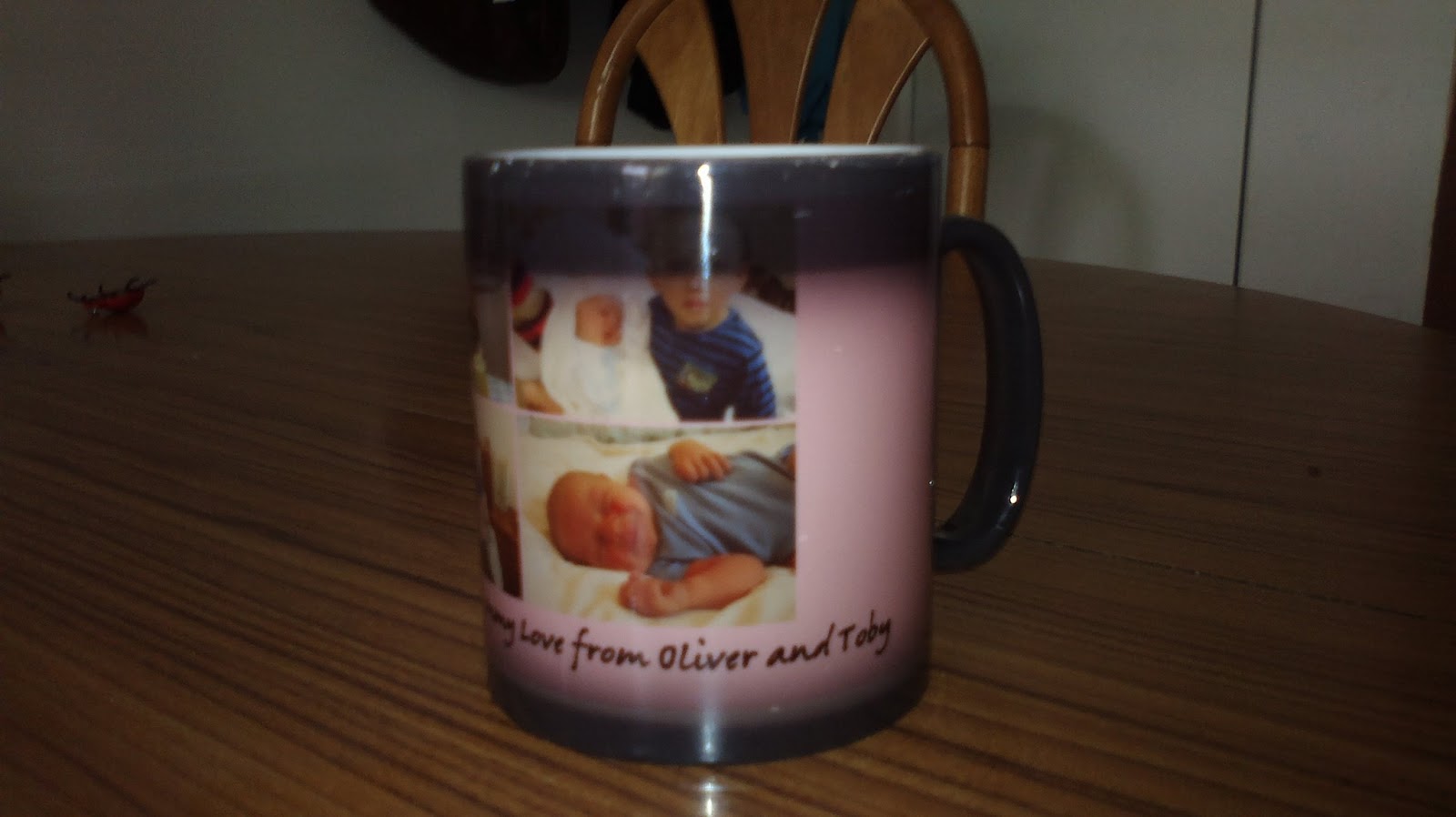
One way I am attempting to do this is my making the children feel that they are at the heart of our home. They have reminders of this in every room, from the pictures of them on the walls and mugs (from Tesco and Snapfish), the silly cows at the bottom of the stairs above Ollies throne area (not that he uses his potty any more, but it will be there for Toby in due course), the areas for toys and books all over the house, and in the artwork in their bedrooms. No-one visiting us could have any doubts that our lives
revolve firmly around the children, and I hope in so doing that the boys will grow up knowing they are loved and we belong to each other wherever we end up.
Although I have painted a door mural, most of the environmental enrichment is completely moveable. This has been a conscious intention from the start, because who knows where any of us can end up in the future, and if we need to move for jobs, we will be able to make the unfamiliar familiar with the personal touches from our old home. The drawing I made for Ollie when he was a baby will go up in any bedroom he has, until he decides he's too old for it at least. The map beneath it is a lovely new addition from http://www.paperthemes.co.uk/ gifts-greeting-cards/ personalised-posters/. This company offers a range of personalised stationary, including fab posters which you can customise with your details. In our case I chose one that we can use to track our travels as a family, customised with our name and the date of our wedding.
The company also does posters for all sorts of events, such as to welcome a new baby, or for a christening (I was very tempted by these, but with four new babies arrived or on the way this year from close friends and family, plus a christening next week, I couldn't pick between them).
Our poster arrived this week, and I'm really pleased with the quality and finish. I've mounted on corrugated cardboard so we can stick pins in of the places we've visited together as a family. I think I'll look out for some tiny pins or stickers so we can colour code the places we've been and the places we dream of seeing.
For families where one parent works abroad, like those in the armed forces, this could be a nice way of tracking where the absent parent is, so children can visualize where mum or dad is at any given time. Or perhaps for children who have family abroad, or an international heritage, it could be a way to place everyone.
However you do it, your little ones will surprise you by how much they notice and appreciate the new additions you make with them in mind, and in years to come I hope mine are mentioning how much they felt cherished as a child when they are my age now x
This post was sponsored, but the ideas and images are all my own (lets face it, much as we love it, you're never going to see my house in ideal homes!)
change can upset our kids though, and there are many ways we can help to raise children who feel like they belong. As a child my family moved a few times for jobs, and it always troubled me that I couldn't reply to the simple question in French classes 'where are you from?'. I was born in Scotland, but left as a tiny baby, and my family and accent weren't Scottish, so I couldn't claim to be 'from' Scotland. Likewise Devon, or
Buckinghamshire, or Worcestershire, or Cambridgeshire. My parents were however (and still are) masters of making you feel loved and cherished and this is an environment I want to imitate as I learn to be a good parent myself.
One way I am attempting to do this is my making the children feel that they are at the heart of our home. They have reminders of this in every room, from the pictures of them on the walls and mugs (from Tesco and Snapfish), the silly cows at the bottom of the stairs above Ollies throne area (not that he uses his potty any more, but it will be there for Toby in due course), the areas for toys and books all over the house, and in the artwork in their bedrooms. No-one visiting us could have any doubts that our lives
revolve firmly around the children, and I hope in so doing that the boys will grow up knowing they are loved and we belong to each other wherever we end up.
Although I have painted a door mural, most of the environmental enrichment is completely moveable. This has been a conscious intention from the start, because who knows where any of us can end up in the future, and if we need to move for jobs, we will be able to make the unfamiliar familiar with the personal touches from our old home. The drawing I made for Ollie when he was a baby will go up in any bedroom he has, until he decides he's too old for it at least. The map beneath it is a lovely new addition from http://www.paperthemes.co.uk/
The company also does posters for all sorts of events, such as to welcome a new baby, or for a christening (I was very tempted by these, but with four new babies arrived or on the way this year from close friends and family, plus a christening next week, I couldn't pick between them).
Our poster arrived this week, and I'm really pleased with the quality and finish. I've mounted on corrugated cardboard so we can stick pins in of the places we've visited together as a family. I think I'll look out for some tiny pins or stickers so we can colour code the places we've been and the places we dream of seeing.
For families where one parent works abroad, like those in the armed forces, this could be a nice way of tracking where the absent parent is, so children can visualize where mum or dad is at any given time. Or perhaps for children who have family abroad, or an international heritage, it could be a way to place everyone.
However you do it, your little ones will surprise you by how much they notice and appreciate the new additions you make with them in mind, and in years to come I hope mine are mentioning how much they felt cherished as a child when they are my age now x
This post was sponsored, but the ideas and images are all my own (lets face it, much as we love it, you're never going to see my house in ideal homes!)
Tuesday, 21 May 2013
Spring foraging
There are few ways as certain to get kids interested in wild plants, and cooking, as foraging for a few ingredients in your local park or woods. The act of foraging gives children skills such as plant identification and a sense for the changing of the seasons. It is really really important that you drive the message home however that they don't put anything in their mouths that you haven't looked at and returned to them, having checked it is safe to eat! Opportunities for foraging are all around us. The top picture, taken from the verge outside Ollie's nursery, shows garlic mustard (or 'jack-by-the-hedge'), which for those who like garlicky mustard makes an addition to the spring salad bowl (not for me though, bleurgh!) In the background is one of the first plants Ollie learned to identify last year - cleavers, or as he knows it 'sticky willy'. This is reputed to be a cleansing herb and a good tonic, and our old greyhound certainly
couldn't get enough of it, although we tend to mostly use it for sticking to each other and making crowns.
Dandelions are good, and easy to identify. A few leaves add a nice bitter twist in sandwiches and salads, and the petals are also edible. Go easy on the leaves though, as they are a diuretic (hence the folk name 'pee-the-bed'). My absolute favourite at this time of year is wild garlic, or ramsons, which is hugely prolific in our neck of the woods. It's a good starting-out with foraging plant too, because it smells pungently of garlic, and the wide green leaves don't look much like anything else at this time of year. Still, if you've not been foraging before it's worth booking into a guided walk to make sure you're doing it all safely. For example, I wouldn't personally eat foraged mushrooms, because despite the biology degree and years of fieldwork, I'm just not that confident that I won't poison myself.
So what to do with all your foraged goodies? In the case of wild garlic, the opportunities extend to anything you would use plants from it's family for - think of mild garlic, chives, leek, shallot, salad onions. We really enjoyed wild garlic omelettes last year for example. After our latest trip, Ollie had got a bit carried away and filled a whole bag. It's really important not to deplete an area, and to use everything you take away, so my standby for excess ramsons is 'wild garlic butter' patties. Wash your ramsons leaves. chop them up finely or whizz them with a blender, then mix up with butter. Use two teaspoons to form patties, arrange on a baking sheet and then pop into the freezer. When they're frozen, you can tip them into a freezer bag and just take out a couple as needed. They're great put in with a piece of fish in a tin foil parcel in the oven. We also wilted chopped ramsons in butter and used it for a really decadent topping for mashed potatoes.

The pungency of this plant makes it really appealing to my boys - Toby liked stirring the chopped ramsons into the butter, and Ollie had a go at making the patties with teaspoons, although after running around collecting them he was more interested in eating the finished product than doing the cooking this time.
If you're not near somewhere sensible for collecting wildfoods, or you are really nervous of picking up the wrong thing (it's always best to be cautious), then you can provide a similar experience for your kids by growing a few eatables in your garden, or by taking them to pick-your-own farms. The highlight of Ollie's toddler year was the trip to Tanyard Farm PYO, although I did have to warn nursery they might be in for some odd nappies the next day :) Alongside the traditional PYO soft fruit farms, we've even been to some where you can pick veg such as spinach, so you can have a real field-to-table experience and make a whole meal from your gleanings. Hopefully after the deluges and flooded fields last year, this year we'll be able to go fruit picking in the sunshine.
couldn't get enough of it, although we tend to mostly use it for sticking to each other and making crowns.
Dandelions are good, and easy to identify. A few leaves add a nice bitter twist in sandwiches and salads, and the petals are also edible. Go easy on the leaves though, as they are a diuretic (hence the folk name 'pee-the-bed'). My absolute favourite at this time of year is wild garlic, or ramsons, which is hugely prolific in our neck of the woods. It's a good starting-out with foraging plant too, because it smells pungently of garlic, and the wide green leaves don't look much like anything else at this time of year. Still, if you've not been foraging before it's worth booking into a guided walk to make sure you're doing it all safely. For example, I wouldn't personally eat foraged mushrooms, because despite the biology degree and years of fieldwork, I'm just not that confident that I won't poison myself.
So what to do with all your foraged goodies? In the case of wild garlic, the opportunities extend to anything you would use plants from it's family for - think of mild garlic, chives, leek, shallot, salad onions. We really enjoyed wild garlic omelettes last year for example. After our latest trip, Ollie had got a bit carried away and filled a whole bag. It's really important not to deplete an area, and to use everything you take away, so my standby for excess ramsons is 'wild garlic butter' patties. Wash your ramsons leaves. chop them up finely or whizz them with a blender, then mix up with butter. Use two teaspoons to form patties, arrange on a baking sheet and then pop into the freezer. When they're frozen, you can tip them into a freezer bag and just take out a couple as needed. They're great put in with a piece of fish in a tin foil parcel in the oven. We also wilted chopped ramsons in butter and used it for a really decadent topping for mashed potatoes.
The pungency of this plant makes it really appealing to my boys - Toby liked stirring the chopped ramsons into the butter, and Ollie had a go at making the patties with teaspoons, although after running around collecting them he was more interested in eating the finished product than doing the cooking this time.
If you're not near somewhere sensible for collecting wildfoods, or you are really nervous of picking up the wrong thing (it's always best to be cautious), then you can provide a similar experience for your kids by growing a few eatables in your garden, or by taking them to pick-your-own farms. The highlight of Ollie's toddler year was the trip to Tanyard Farm PYO, although I did have to warn nursery they might be in for some odd nappies the next day :) Alongside the traditional PYO soft fruit farms, we've even been to some where you can pick veg such as spinach, so you can have a real field-to-table experience and make a whole meal from your gleanings. Hopefully after the deluges and flooded fields last year, this year we'll be able to go fruit picking in the sunshine.
Thursday, 16 May 2013
Thou shalt have a fishy...
My boys have a passion for fish that would make even Rick Stein blush. Ollie will eat any kind of fish you put in front of him, from tinned mackerel on toast to raw fish in sushi. Toby's not so keen on the sushi, but has eagerly nommed everything else. The only exceptions so far have been cockles which Ollie says 'taste like bogeys, not nice bogeys, yucky bogeys' and a certain fast food outlets 'fish fingers'.
Ollie also loves to shop for the ingredients for his meals, and have a choice in what we get. My favourite place to shop for fish is from the shops in the net sheds down on the Old Town seafront here in Hastings. Ollie likes to go in by himself with 10p to buy a fish stick to eat as we walk (usually on our way back from the aquarium - Ollie's not bothered that he's eating Nemo's distant relatives).
For this particular meal however I wasn't even intending on having fish, but when we got to the supermarket the first place Ollie dragged us to was the fish counter. He had a great time talking to the very informative man there, who when Ollie picked out sea breem showed him it's sharp teeth, and the long spines in it's dorsal fin. The man told Ollie that when a big fish comes to eat the breem, it raises the spikes up so the big fish won't eat it. Ollie spent all day with his fingers fanned out on the top of his head shouting 'you're a big fish, you can't eat me, I put my spines out like this and it hurts your mouth!'. I tried to steer him towards something cheaper, like trout or mackerel, but he had his heart set on the 'big teeth fishy'.
When we got home, we had a couple of hours of begging to see his big teeth fishies, before Toby finally had a nap. Much as I like cooking with both the boys, the fish knife is very very sharp and I get nervous enough using it with Ollie nearby, without Toby climbing around too. Ollie made a thorough exploration of his fish, and was especially fascinated by its fins and eyes. We did a bit of dissection exploration, which I won't go in to as I don't want to turn stomachs :) I trimmed off the fins with scissors, removed the head by making an incision behind the gills, and cleaned any stray bits of innards. Then after removing all the bits that needed removing, Ollie helped me to do a last bit of de-scaling by running a plastic knife all over the fish in the direction of tail-to-head (always worth it as there's always a few left even when it's a shop prepared fish, and those scales are really hard and sharp). Ollie rubbed olive oil over the fish and then wrapped them in tin foil, and put them in the fridge ready to go in the oven later. He also helped me to scrub the new potatoes he'd chosen, and snap the woody ends off the asparagus. Beans on toast for tea the next night after such extravagance!
Seeing the food growing is the only thing this meal lacked to make it a more rounded experience, but growing food in the garden, and visits to PYO and farms are all part of the learning agenda taken as a whole year. Even so, we covered a huge variety of ideas, including; foodchains (who eats whom); food hygiene (wash your hands before and after cooking, don't rub fishy hands on your trousers and why); senses (what does the fish feel like, what does the asparagus taste like, what does the ginger for the sauce smell like...); adaptations (why does a fish look different to a person) and so on, not least the home economics aspects of cooking. Every bit of the finished meal was eaten, which tends to be the case when kids have a hand in making their own food.
The big key is, however, timing. Cooking is mainly led by the kids, by which I mean we cook together when they feel the need to. Sometimes I'll suggest making something, expecting a stampede to the kitchen, only to be told 'not now mummy, I'm playing with Toby'. It's really important to try to match your activity to your kids energy that moment, as it's counterproductive turning a fun family activity into a chore or a 'boring lesson' because you've judged it wrong. This is something that schools can't do, because they must follow set patterns and lessons for practical reasons, but at home we do have more flexibility to pick up on what appeals our little ones that day, and provide nurturing opportunities for them to pursue their interests. And sometimes it's nice for them to get the occasional 'win' among the usual 'not that, it's bad for you/too expensive' replies to their endless demands in the shops and get to choose some groceries themselves. You never know, you may end up with fish, new potatoes and asparagus. Or pretzels, squid and squeezy cheese if your offspring are new to this food shopping malarkey :)
Ollie also loves to shop for the ingredients for his meals, and have a choice in what we get. My favourite place to shop for fish is from the shops in the net sheds down on the Old Town seafront here in Hastings. Ollie likes to go in by himself with 10p to buy a fish stick to eat as we walk (usually on our way back from the aquarium - Ollie's not bothered that he's eating Nemo's distant relatives).
For this particular meal however I wasn't even intending on having fish, but when we got to the supermarket the first place Ollie dragged us to was the fish counter. He had a great time talking to the very informative man there, who when Ollie picked out sea breem showed him it's sharp teeth, and the long spines in it's dorsal fin. The man told Ollie that when a big fish comes to eat the breem, it raises the spikes up so the big fish won't eat it. Ollie spent all day with his fingers fanned out on the top of his head shouting 'you're a big fish, you can't eat me, I put my spines out like this and it hurts your mouth!'. I tried to steer him towards something cheaper, like trout or mackerel, but he had his heart set on the 'big teeth fishy'.
When we got home, we had a couple of hours of begging to see his big teeth fishies, before Toby finally had a nap. Much as I like cooking with both the boys, the fish knife is very very sharp and I get nervous enough using it with Ollie nearby, without Toby climbing around too. Ollie made a thorough exploration of his fish, and was especially fascinated by its fins and eyes. We did a bit of dissection exploration, which I won't go in to as I don't want to turn stomachs :) I trimmed off the fins with scissors, removed the head by making an incision behind the gills, and cleaned any stray bits of innards. Then after removing all the bits that needed removing, Ollie helped me to do a last bit of de-scaling by running a plastic knife all over the fish in the direction of tail-to-head (always worth it as there's always a few left even when it's a shop prepared fish, and those scales are really hard and sharp). Ollie rubbed olive oil over the fish and then wrapped them in tin foil, and put them in the fridge ready to go in the oven later. He also helped me to scrub the new potatoes he'd chosen, and snap the woody ends off the asparagus. Beans on toast for tea the next night after such extravagance!
Seeing the food growing is the only thing this meal lacked to make it a more rounded experience, but growing food in the garden, and visits to PYO and farms are all part of the learning agenda taken as a whole year. Even so, we covered a huge variety of ideas, including; foodchains (who eats whom); food hygiene (wash your hands before and after cooking, don't rub fishy hands on your trousers and why); senses (what does the fish feel like, what does the asparagus taste like, what does the ginger for the sauce smell like...); adaptations (why does a fish look different to a person) and so on, not least the home economics aspects of cooking. Every bit of the finished meal was eaten, which tends to be the case when kids have a hand in making their own food.
The big key is, however, timing. Cooking is mainly led by the kids, by which I mean we cook together when they feel the need to. Sometimes I'll suggest making something, expecting a stampede to the kitchen, only to be told 'not now mummy, I'm playing with Toby'. It's really important to try to match your activity to your kids energy that moment, as it's counterproductive turning a fun family activity into a chore or a 'boring lesson' because you've judged it wrong. This is something that schools can't do, because they must follow set patterns and lessons for practical reasons, but at home we do have more flexibility to pick up on what appeals our little ones that day, and provide nurturing opportunities for them to pursue their interests. And sometimes it's nice for them to get the occasional 'win' among the usual 'not that, it's bad for you/too expensive' replies to their endless demands in the shops and get to choose some groceries themselves. You never know, you may end up with fish, new potatoes and asparagus. Or pretzels, squid and squeezy cheese if your offspring are new to this food shopping malarkey :)
Subscribe to:
Posts (Atom)